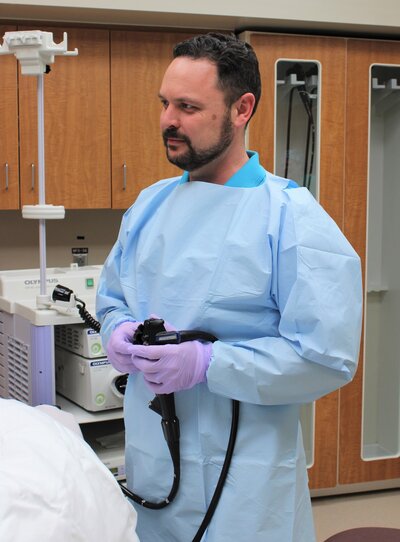
Dr. Josh Thoendel standing in an exam room.
Colorectal Cancer Awareness
by Dr. Josh Thoendel of Antelope Memorial Hospital
Colorectal cancer is the 3rd most common cancer in both men and women and is very preventable. The most common form of colorectal cancer starts out as small abnormal growths, called polyps, that can grow and mutate over time to transform into cancer. If these polyps are removed when they are small, they never get the chance to evolve into cancer. These polyps grow slowly so screening doesn’t need to be an annual event. Intervals depend on several factors and most people wait years between screenings. Polyps are more likely in people with certain genetic risk factors, tobacco use, alcohol use, and poor diet, but colorectal cancer is so common that even people without any risk factors should be proactive and get screened.
Colonoscopies are the gold standard for screening. A camera is used to look at the inside of the colon along its entire length and any polyps that are seen are removed. The procedure is done under sedation which makes it much more comfortable for the patient. A laxative prep is required the night before to remove stool from the colon. If no polyps are seen and there are no increased risks of cancer, it can be up to 10 years before the procedure needs repeated.
Stool-based tests analyze a small sample of stool and look for blood or DNA associated with cancer. These tests are less invasive because there is no prep involved; however, any positive tests will require a colonoscopy. Stool-based tests are also less accurate than a colonoscopy and need to be repeated more frequently.
The United States Preventative Services Task Force recommends all people between the ages of 45 and 75 be screened for Colorectal Cancer. Previously, screenings were for ages 50 to 75 but the age was lowered due to many cases of advanced cancer being found during the initial screen at age 50. If you have a strong family history, you may need screening at an earlier age or more frequent intervals. Talk to your AMH care provider about this necessary service or call AMH Family Practice Clinic at 402-887-5440 to schedule your screening. Dr. Troy Dawson, Dr. Roger Rudloff and Dr. Thomas Beutler also offer colonoscopies at AMH.